How Does Kitchen Cleaner Enhance Grease-removal Performance?
Grease is one of the most persistent forms of kitchen contamination. Cooking oil can spread across countertops, stovetops, range hoods, walls and equipment, while repeated heating can turn fresh oil into sticky or hardened deposits. As commercial and household kitchens place greater emphasis on efficient cleaning, the performance of kitchen cleaner is becoming an important factor in daily maintenance.
A well-designed kitchen cleaner does more than simply wet a greasy surface. Its formulation is usually designed to loosen, emulsify, suspend and remove oily residues. This combination allows a kitchen degreaser to work more effectively than ordinary water-based cleaning products when dealing with heavy grease.
How Does Kitchen Cleaner Break Down Grease?
The main challenge with grease is that oil does not naturally mix with water. When water is applied alone, it may spread the contamination without removing it completely. A professional kitchen cleaner uses ingredients that help reduce surface tension and improve contact between the cleaning solution and oily deposits.
Surfactants are particularly important in this process. They help the solution penetrate greasy films and surround oil particles, allowing them to become suspended in water. This makes it easier to wipe or rinse the contamination away. For this reason, the surfactant system is a major performance indicator when evaluating a kitchen grease cleaner.
A strong kitchen degreaser may also contain alkaline components that help break down certain fatty soils. Alkalinity can be especially useful against cooking fats and food residues that have accumulated over time. However, stronger chemistry is not automatically better for every surface, so product instructions and material compatibility remain important.
Why Alkalinity Matters in Grease Removal
Many kitchen grease deposits contain fatty acids and other compounds that become increasingly difficult to remove after repeated heating. An appropriately formulated kitchen grease remover can use alkaline chemistry to change the structure of some greasy soils, making them easier to disperse and remove.
This is one reason a kitchen degreaser can perform differently from a general-purpose cleaner. General cleaners may be suitable for dust, fingerprints or light food residue, while a dedicated kitchen grease cleaner is formulated with oily contamination in mind.
However, the strongest formula is not always the best choice. A highly alkaline kitchen grease remover may require additional care on sensitive materials such as certain soft metals or finished surfaces. Effective cleaning therefore depends on matching the chemistry with the type of grease and the surface being cleaned.
Contact Time Improves Cleaning Efficiency
Another factor often overlooked by users is contact time. Spraying a kitchen cleaner onto grease and wiping immediately may remove surface dirt, but heavier deposits may need several minutes for the cleaning ingredients to penetrate and loosen the contamination.
Allowing a kitchen grease cleaner to remain on the surface for the recommended period can improve the overall cleaning process. The solution has more time to penetrate oily layers, soften residues and separate grease from the surface.
For heavily contaminated equipment, a kitchen degreaser may therefore work best when combined with an appropriate dwell time. This approach can reduce the amount of aggressive scrubbing required and make routine cleaning more consistent.
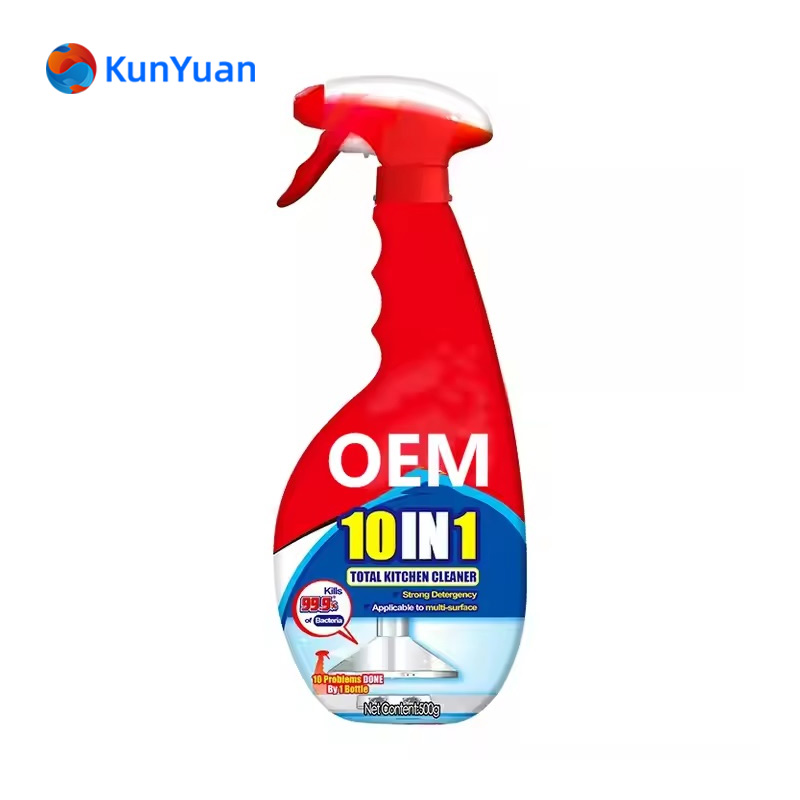
kitchen degreaser
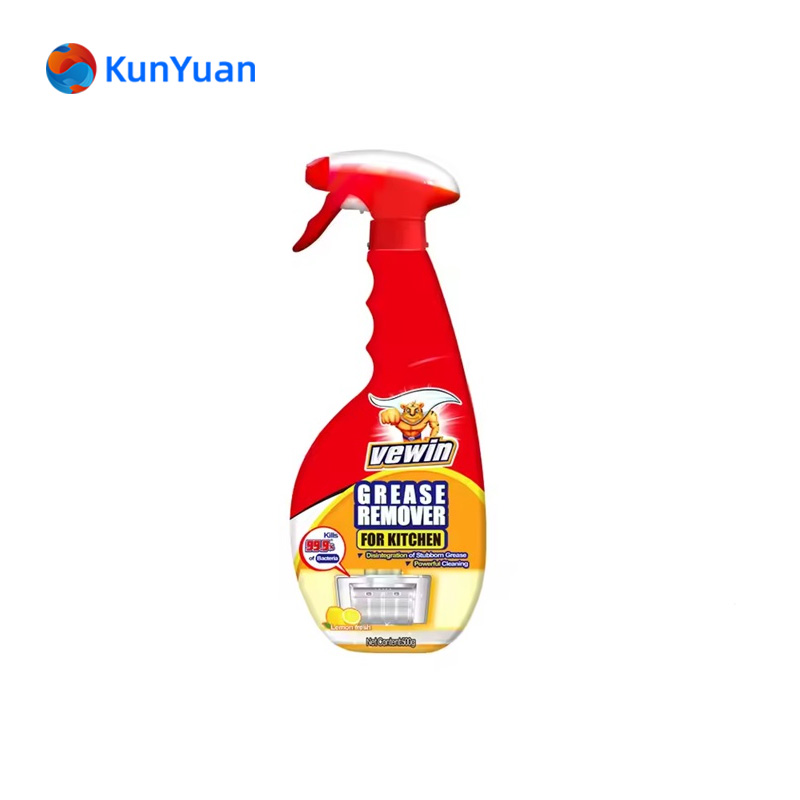
kitchen cleaner

strongest degreaser kitchen
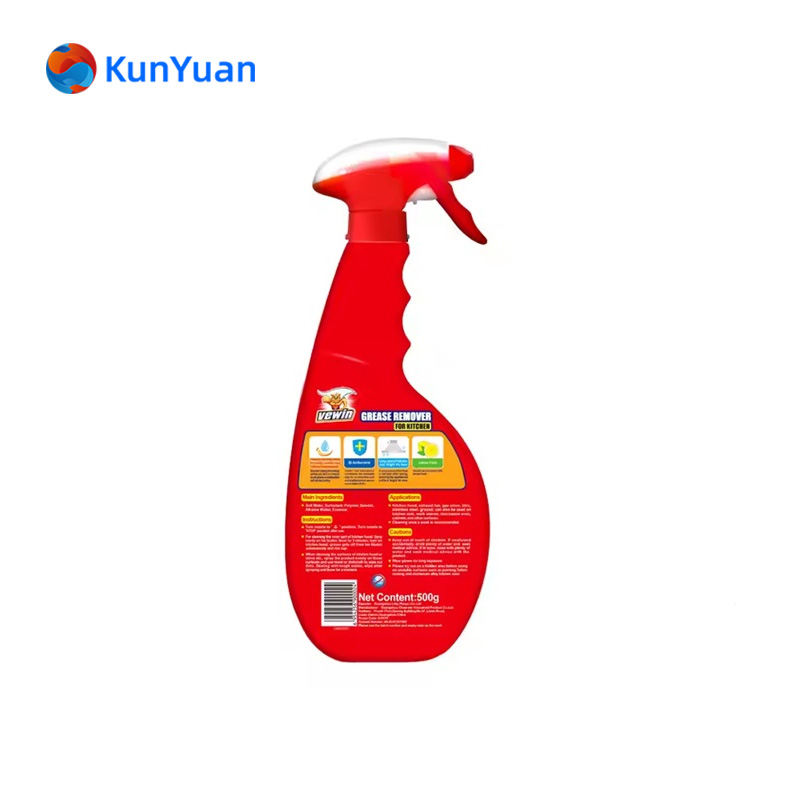
kitchen grease remover
Heat Can Support Grease Removal
Temperature also influences grease-removal performance. Fresh cooking oil is generally easier to move than thick, cooled or baked-on grease. Warm surfaces can help soften certain oily deposits, allowing a kitchen grease remover to penetrate more efficiently. Excessive heat can increase chemical activity and may create unnecessary safety risks. The goal is not simply to use the highest temperature, but to create suitable conditions for the kitchen cleaner to work effectively.
Physical Agitation Completes the Process
Chemistry loosens grease, but physical action often completes the removal process. After a kitchen degreaser has had sufficient contact time, wiping, brushing or scrubbing can lift the softened residue from the surface.
For light contamination, a cloth may be enough. For hardened deposits, a suitable brush or cleaning pad can provide additional mechanical action. A properly selected kitchen grease cleaner therefore works as part of a complete cleaning process rather than as a substitute for correct cleaning technique.
The same principle applies when comparing the strongest degreaser kitchen users can choose. Maximum chemical strength does not guarantee maximum cleaning efficiency if the product is incorrectly diluted, applied to an unsuitable surface or removed too quickly.
Choosing the Strongest Degreaser Kitchen Users Need
Search interest around the strongest degreaser kitchen products often reflects a desire for faster grease removal. However, professional cleaning decisions should consider more than strength alone.
The ideal strongest degreaser kitchen solution should provide an appropriate balance of grease-cutting ability, surface compatibility, ease of rinsing and practical application. A powerful kitchen grease remover that leaves residue or damages a sensitive surface may create more problems than it solves.
For daily maintenance, a moderately strong kitchen cleaner may be sufficient. Heavy cooking areas may require a specialized kitchen degreaser, while baked-on deposits may need a stronger kitchen grease cleaner combined with longer contact time and mechanical agitation.
What Is Driving the Next Generation of Kitchen Cleaners?
Future kitchen cleaner development is likely to focus on efficiency rather than strength alone. Concentrated formulas, better surfactant systems, controlled alkalinity and easier rinsing can help improve cleaning results while reducing unnecessary product consumption.
The role of the kitchen degreaser is also expanding as kitchens become more focused on consistent maintenance. A reliable kitchen grease cleaner can support routine cleaning schedules, while a targeted kitchen grease remover can address stubborn deposits before they become difficult to manage.
The best strongest degreaser kitchen solution is not simply the most aggressive formula. Effective grease removal depends on chemistry, concentration, temperature, contact time, agitation and surface compatibility working together. As kitchens continue to demand faster and more reliable cleaning, kitchen cleaner will remain important product concepts in the development of modern grease-removal solutions.
Hainan Kunyuan Life Technology Co., Ltd. owns a one-stop service platform, Rihua Cloud, which connects the best resources and capabilities under the empowerment and guidance of the government and industry associations, and provides one-stop services for daily chemical companies. Rihua Cloud offers five core services: procurement transactions, OEM/ODM, channel operations, digital solutions, and supply chain finance, to help companies solve operational problems, improve quality and efficiency, achieve sustainable growth, and promote industrial upgrading and high-quality development in the daily chemical industry.