How Do Laundry Scent Booster Beads Release Fragrance?
Modern laundry care is increasingly focused on more than removing stains and odors. Consumers also expect clothes, towels and bedding to maintain a pleasant scent after washing. This demand has increased attention toward laundry scent booster beads, a specialized product format designed to deliver fragrance during the washing process.
Unlike detergent, which is primarily responsible for cleaning, laundry scent booster beads are formulated with fragrance delivery as a central purpose. Their performance depends not only on the fragrance itself but also on how effectively the bead structure releases fragrance during washing and how well the scent remains associated with fabric afterward.
How Do Washer Scent Beads Release Fragrance?
Washer scent beads are generally placed directly into the washing machine drum before clothes are added. Once the wash cycle begins, water gradually interacts with the bead material. Mechanical movement and water exposure then help the beads dissolve or disperse, releasing fragrance into the washing environment. The release speed of washer scent beads are influenced by bead composition, size, hardness and water temperature. A bead that dissolves too quickly may release most of its fragrance early in the cycle, while a carefully designed structure can support more controlled fragrance delivery.
For this reason, formulation consistency is an important consideration. Uniform bead size and stable physical properties can help ensure that washer scent beads perform more consistently across different laundry loads.
What Role Do Laundry Fragrance Beads Play?
Laundry fragrance beads are designed to complement the cleaning function of detergent. Instead of relying entirely on the fragrance already present in a cleaning product, consumers can use laundry fragrance beads to add a separate fragrance layer to their laundry routine.
The fragrance system may contain different combinations of aromatic ingredients, depending on the desired scent profile. Fresh, floral, fruity, woody and clean linen-inspired fragrances are common directions for product development.
The carrier material is also important. Laundry fragrance beads need to maintain their physical form during storage while being able to interact appropriately with water during washing. Moisture resistance, fragrance stability and controlled dissolution all contribute to product quality.
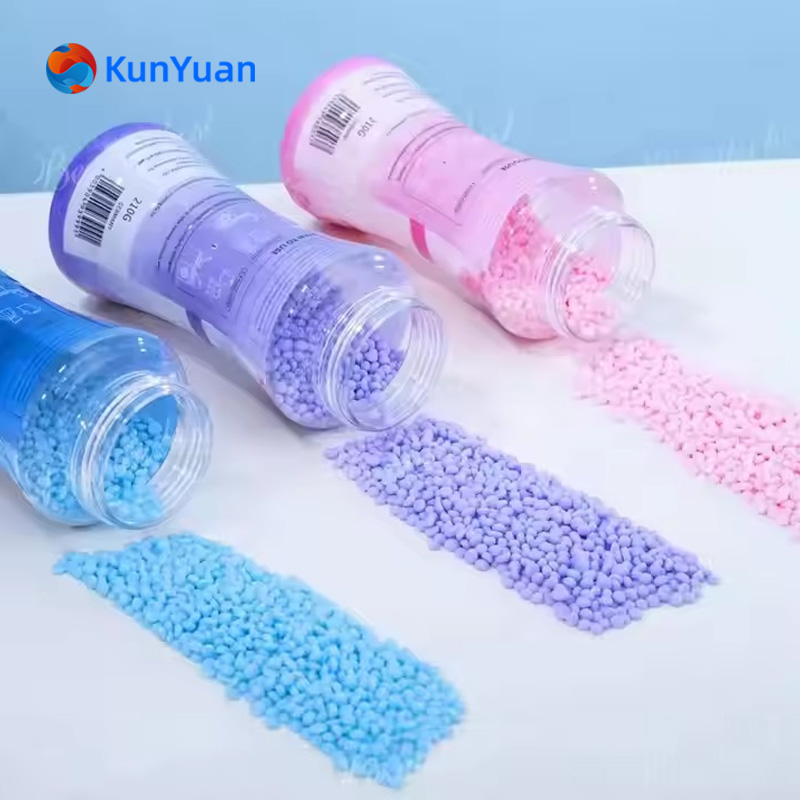
laundry fragrance beads
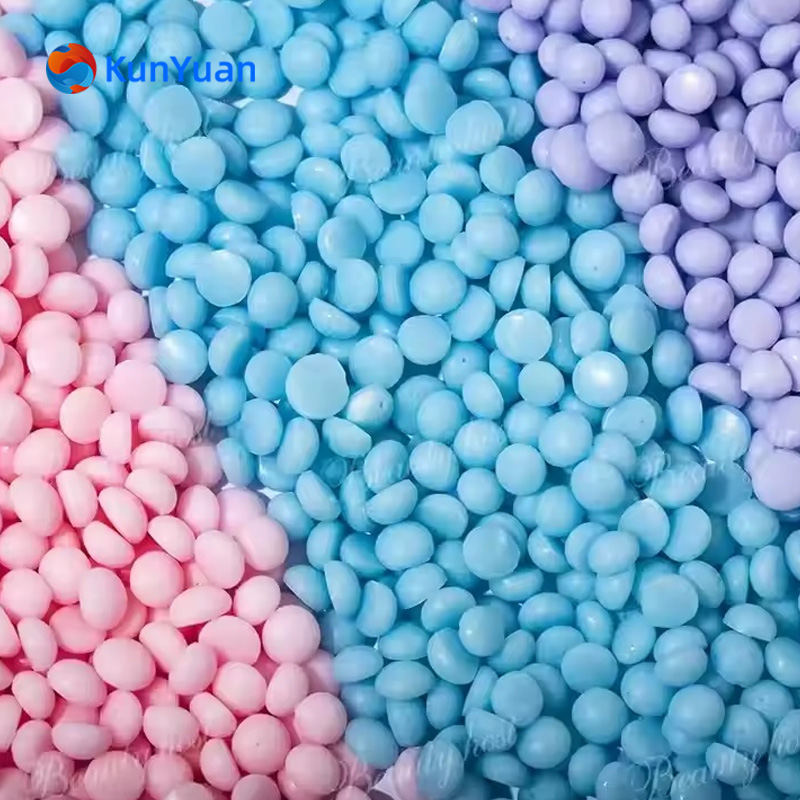
washer scent beads
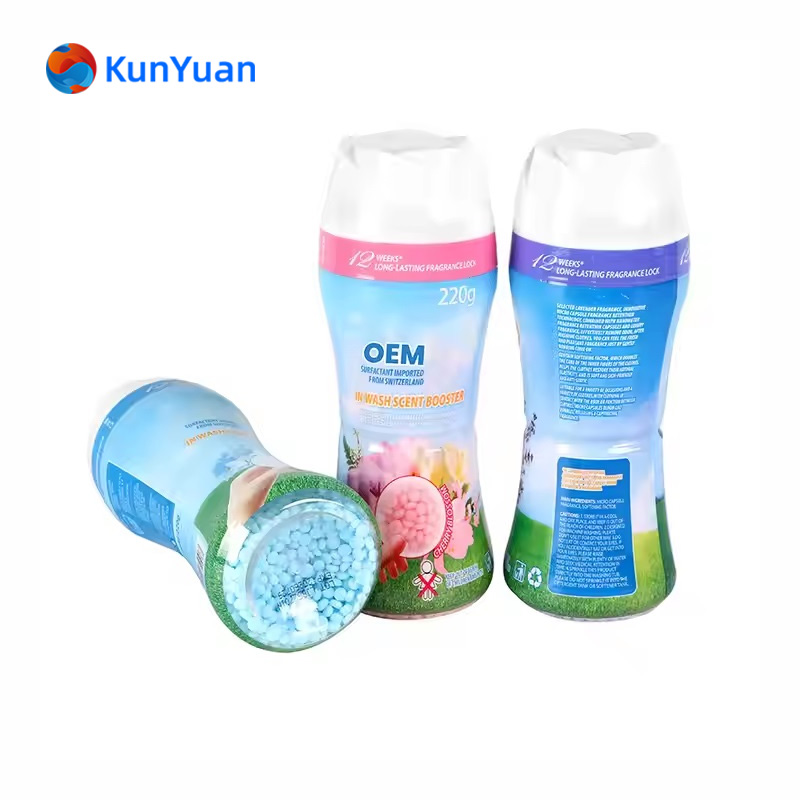
laundry fragrance beads
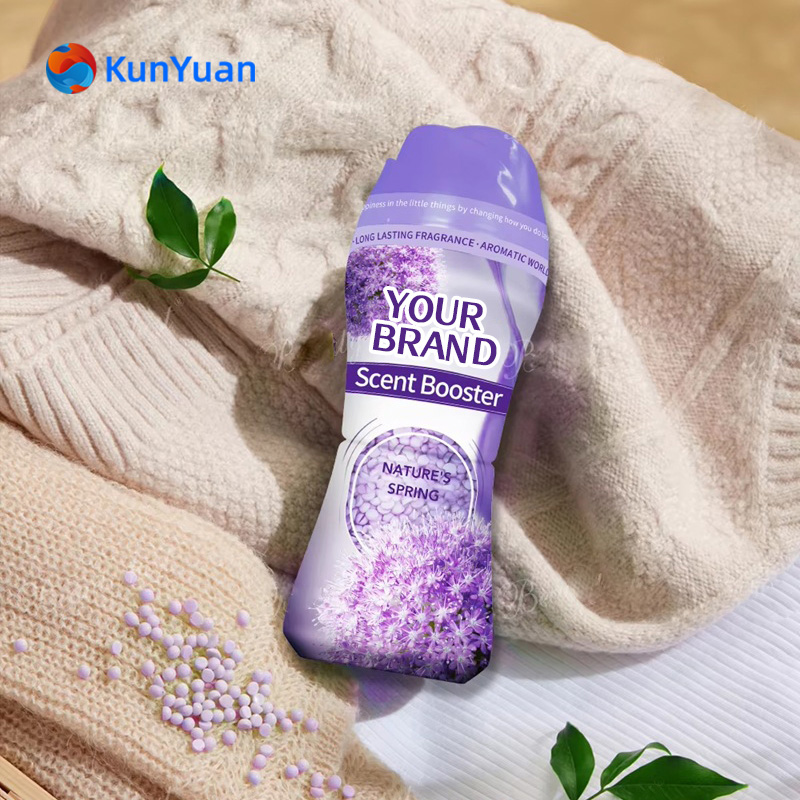
washer scent beads
How Does a Laundry Scent Booster Work?
A laundry scent booster is designed to enhance the fragrance experience during and after washing. When the beads dissolve, fragrance components are released into the wash water and can interact with textile fibers. The effectiveness of a laundry scent booster depends on several variables. Fabric composition, washing temperature, cycle length, detergent formulation and drying conditions can all influence fragrance retention. A high fragrance concentration alone does not guarantee long-lasting freshness. Effective laundry scent booster development requires a balance between fragrance loading, release speed and fabric retention.
What Makes Scent Booster Beads Effective?
The structure of scent booster beads is one of the most important factors affecting fragrance release. Bead size, density, hardness and carrier composition can determine how quickly water penetrates the material.
During the washing process, scent booster beads gradually interact with water and release fragrance ingredients. Depending on the formulation, some fragrance components can remain associated with fabric fibers after the main wash has ended.
Advanced fragrance technologies may further improve this process. Encapsulation and controlled-release systems can help protect selected fragrance components during washing and allow them to become noticeable over a longer period.
What Factors Affect Fragrance Performance?
Several external conditions can change the performance of laundry scent booster beads. Hotter water may accelerate dissolution, while different fabrics can have different abilities to retain fragrance. Drying temperature and storage conditions may also affect how long the scent remains noticeable.
Dosage is another consideration. Consumers should follow the recommended amount because increasing the quantity does not necessarily create proportionally longer-lasting fragrance.
For manufacturers, quality testing should evaluate fragrance stability, bead uniformity, dissolution behavior and packaging protection. These factors help ensure that laundry scent booster beads maintain consistent performance throughout their intended shelf life.
What Is the Future of Fragrance Release Technology?
The development of laundry scent booster beads is increasingly moving toward controlled fragrance delivery, longer-lasting freshness and more personalized scent experiences. Consumers want products that are convenient while providing noticeable fragrance beyond the washing cycle.
Future laundry scent booster beads may combine improved carrier materials, optimized fragrance systems and more sustainable packaging. Concentrated formulations and precise dosing may also become increasingly important as laundry care products respond to changing consumer expectations.
The ability of laundry scent booster beads to release fragrance effectively depends on the interaction between formulation, bead structure, washing conditions and fabric characteristics. Continued innovation in these areas can help create a more consistent, convenient and long-lasting laundry fragrance experience.
Hainan Kunyuan Life Technology Co., Ltd. owns a one-stop service platform, Rihua Cloud, which connects the best resources and capabilities under the empowerment and guidance of the government and industry associations, and provides one-stop services for daily chemical companies. Rihua Cloud offers five core services: procurement transactions, OEM/ODM, channel operations, digital solutions, and supply chain finance, to help companies solve operational problems, improve quality and efficiency, achieve sustainable growth, and promote industrial upgrading and high-quality development in the daily chemical industry.